1What is a hotel channel manager?
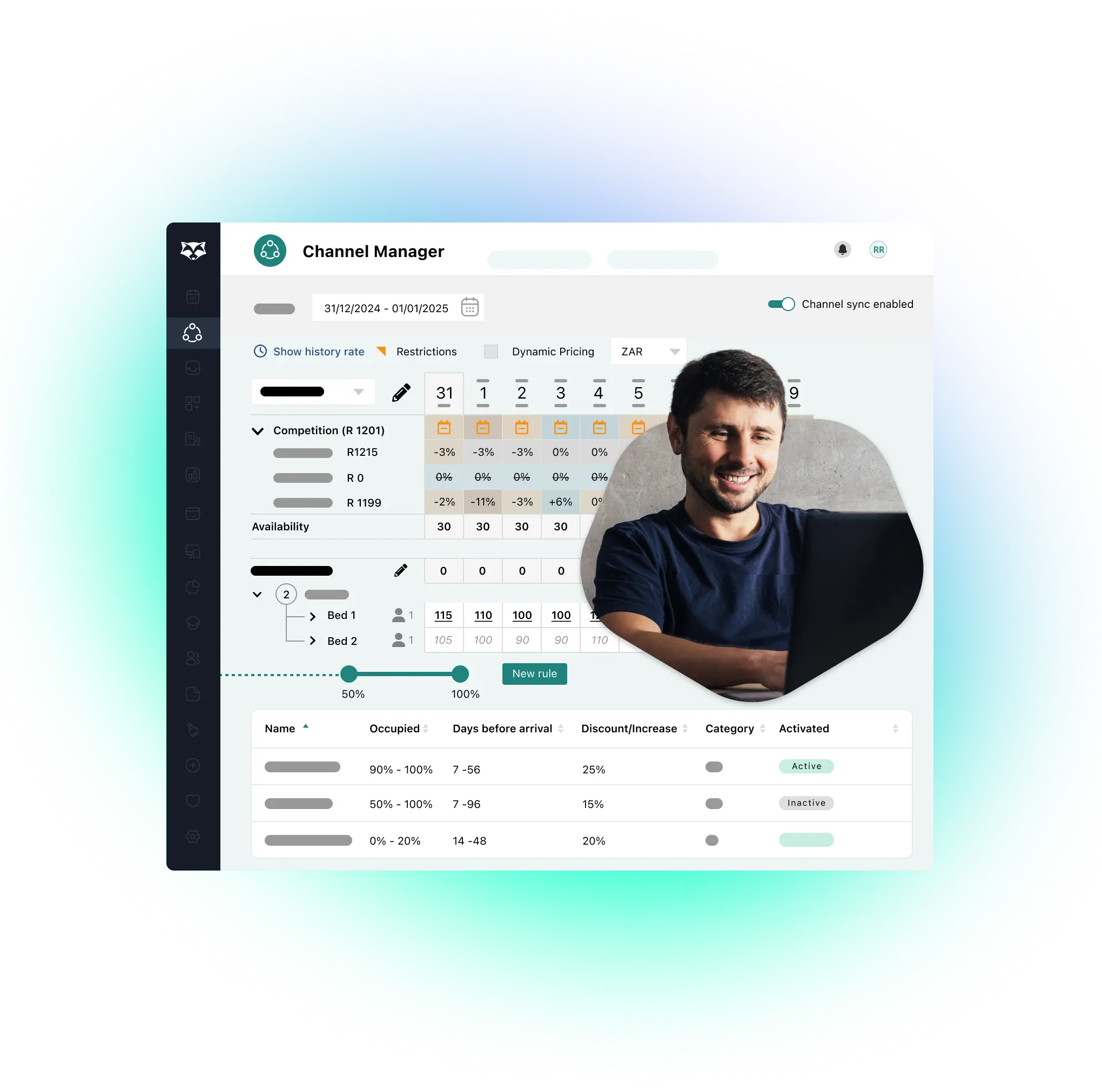
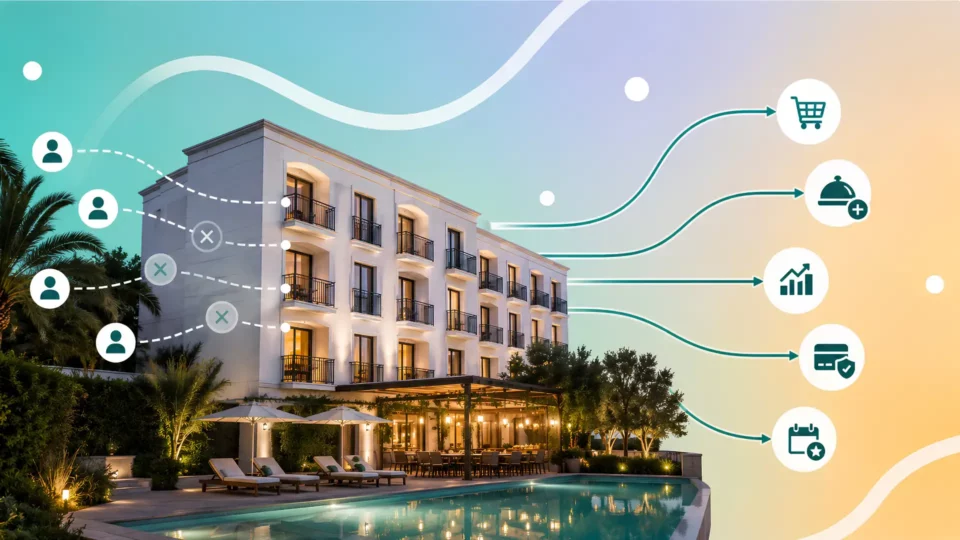
A hotel channel manager is cloud-based hotel software that centralizes the distribution of room availability, rates and restrictions across multiple online sales channels. It automatically synchronizes inventory between OTAs, booking platforms and direct booking systems to prevent discrepancies. By acting as the distribution layer within a broader hospitality tech stack, it enables real-time updates, reduces manual workload and supports consistent pricing strategies across all connected channels, improving operational efficiency and visibility.
2How does a channel manager work with a PMS?
A channel manager integrates directly with a Property Management System (PMS), which serves as the operational core managing reservations, room status and guest data. The PMS sends availability and pricing updates to the channel manager, which then distributes them to OTAs and booking platforms. When a booking occurs, the PMS updates inventory and the channel manager reflects this across all channels instantly. This two-way synchronization ensures accurate data flow, minimizes errors and supports automated hotel operations.
3Why is a channel manager important for hotels and guesthouses in South Africa?
A channel manager is essential in South Africa due to the fragmented distribution landscape, where properties rely on both global OTAs and local booking platforms. It enables real-time inventory management across diverse channels while accommodating local payment methods and pricing in ZAR. For smaller teams and independent operators, automation reduces administrative burden and minimizes costly errors such as overbookings. It also improves competitiveness by ensuring consistent visibility and availability across domestic and international demand sources.
4What is the difference between a channel manager and a booking engine?
A channel manager distributes inventory externally to OTAs and third-party platforms, while a booking engine is a direct booking tool embedded on a property’s website. The booking engine allows guests to make reservations directly, often with integrated payment options. Together, they form a unified distribution strategy where the channel manager ensures consistency across external channels and the booking engine maximizes commission-free bookings, both typically connected to a PMS for centralized control.
5What is the difference between a channel manager and a PMS?
A Property Management System (PMS) is hotel software used to manage internal operations such as reservations, check-ins, housekeeping and guest profiles. A channel manager, by contrast, focuses on external distribution, updating availability and rates across OTAs and booking platforms. While the PMS controls operational workflows, the channel manager ensures market visibility and inventory accuracy. Modern cloud solutions often integrate both functions to streamline workflows and reduce dependency on disconnected systems.
6Which accommodation businesses benefit most from using a channel manager?
Accommodation providers with multiple distribution channels benefit most, including hotels, guesthouses, lodges and serviced apartments. As soon as a property lists on more than one OTA or booking platform, manual updates become inefficient and error-prone. In South Africa’s competitive tourism sector, even small properties benefit from automated distribution, especially when managing seasonal demand, fluctuating rates and diverse guest segments across both local and international markets.
7How does a channel manager help prevent overbookings?
A channel manager prevents overbookings by automatically updating room availability across all connected channels after each reservation, cancellation or modification. This real-time synchronization eliminates the delays associated with manual updates. When one room is booked on an OTA, the system immediately removes it from availability elsewhere. This automation is critical in high-demand periods and ensures operational reliability, protecting both revenue and guest satisfaction.
8How can a channel manager improve revenue management?
A channel manager supports revenue management by enabling centralized control over pricing, availability and restrictions across all channels. Hoteliers can quickly adjust rates based on demand, seasonality or occupancy without logging into multiple extranets. When integrated with a PMS and booking engine, it allows for data-driven decisions, helping optimize occupancy and revenue. Consistent rate distribution also strengthens pricing strategies and reduces discrepancies that could impact conversion.
9What costs are usually associated with channel manager software?
Channel manager costs typically include subscription fees, onboarding and setup, training and optional integrations such as payment providers or revenue management tools. Pricing often depends on the number of rooms, features and whether the solution is part of an all-in-one platform. In South Africa, total cost of ownership should also consider operational savings from automation, reduced errors and increased direct bookings, rather than focusing solely on monthly software fees.
10When should a property move from manual OTA updates to a channel manager?
A property should transition to a channel manager when it begins managing multiple booking channels, experiences frequent rate updates or struggles with manual inventory synchronization. Indicators include double bookings, time-consuming updates and inconsistent pricing across platforms. As demand fluctuates and distribution expands, automation becomes necessary to maintain accuracy and efficiency. Early adoption helps avoid operational bottlenecks and supports scalable growth.
11Which channels should South African properties usually connect first?
South African properties should prioritize connecting the channels that generate the highest booking volume and align with their target market. This often includes a mix of international OTAs, regional booking platforms and direct booking channels. The strategy should be based on performance, commission costs and guest demographics rather than quantity alone. A focused approach ensures efficient distribution while maintaining control over pricing and availability.
12How do direct bookings fit into a channel manager strategy?
Direct bookings are a critical component of a channel manager strategy, as they reduce dependency on commission-based OTAs. A booking engine integrated with the channel manager ensures that direct availability matches third-party listings. This alignment prevents rate discrepancies and improves trust with guests comparing prices. In South Africa, where price sensitivity can be high, consistent pricing across direct and indirect channels is essential for maximizing conversion.
13What payment methods should South African accommodation software support?
Accommodation software in South Africa should support credit and debit cards, secure online payment gateways, instant EFT and bank transfers. Integration with local payment providers ensures compatibility with guest preferences and reduces friction during booking. Payment processing should be fully integrated with the PMS and booking engine to streamline reconciliation and reporting. Supporting transactions in ZAR is essential for accurate pricing and compliance with local financial practices.
14How should a channel manager handle taxes and currency in South Africa?
A channel manager should support pricing in South African rand and allow configuration of tax-inclusive or tax-exclusive rates. VAT at 15% must be accurately reflected across all channels and booking confirmations. The system should ensure consistent tax application in pricing, invoices and reporting. Proper handling of currency and tax settings prevents discrepancies between OTAs and direct bookings, maintaining transparency for guests and compliance with local regulations.
15What data protection rules matter when using hotel software in South Africa?
POPIA governs the processing of personal data in South Africa and applies to hotel software handling guest information. Systems must ensure secure storage, controlled access and lawful processing of personal data such as contact details and payment information. Compliance includes transparency, data minimization and safeguarding against breaches. For channel managers, this is especially important as data flows between multiple systems and integrations across the distribution network.
16Are there South African regulatory issues short-term rental operators should consider?
Short-term rental operators in South Africa must consider evolving regulatory frameworks, including tourism guidelines and municipal requirements. While national legislation is still developing, operators must comply with general business regulations, zoning rules and tax obligations. The Tourism Code of Good Practice provides guidance for responsible operation. Channel managers must support flexible configurations to align with these requirements, particularly for multi-unit or urban rental portfolios.
17How do channel managers support multi-property or group operations?
Channel managers enable centralized control for multi-property operations by allowing operators to manage rates, availability and distribution across multiple locations from one platform. Each property can maintain unique configurations while benefiting from unified reporting and operational consistency. This is particularly valuable for hotel groups or portfolio owners in South Africa who need scalable solutions without duplicating administrative work across properties.
18What integrations matter most besides OTA connections?
Key integrations include PMS, booking engine, payment providers, revenue management systems, guest communication tools and accounting software. These integrations create a connected ecosystem where data flows seamlessly between systems. In South Africa, compatibility with local payment gateways and financial workflows is particularly important. Strong integrations ensure automation delivers real efficiency rather than shifting manual tasks between disconnected tools.
19How long does channel manager implementation usually take?
Implementation typically takes from a few days to several weeks, depending on property complexity, number of channels and integration requirements. The process includes system configuration, room mapping, rate setup, channel connections and testing. Accurate setup is critical, as errors can lead to pricing inconsistencies or booking issues. Proper onboarding and staff training ensure a smooth transition and long-term operational stability.
20What common mistakes should hotels avoid when setting up a channel manager?
Common mistakes include incorrect room mapping, inconsistent rate structures, poor synchronization settings and lack of testing before going live. Failing to align the channel manager with PMS workflows and payment systems can also create operational issues. In South Africa, overlooking VAT settings or local payment configurations can lead to discrepancies. Careful setup and validation are essential to ensure accurate distribution and avoid revenue loss.
21How can a channel manager support independent hotels competing with larger groups?
A channel manager levels the playing field by giving independent hotels access to the same distribution networks and automation capabilities as larger chains. It enables efficient rate management, broader market exposure and consistent inventory control without requiring large teams. In competitive markets like South Africa, this helps smaller properties maintain visibility, optimize pricing and operate more efficiently.
22How does a channel manager affect reporting and decision-making?
A channel manager enhances reporting by consolidating booking data across all channels into a single view. When integrated with a PMS, it provides insights into occupancy, channel performance and revenue trends. This data supports informed decision-making, allowing hoteliers to adjust pricing, promotions and distribution strategies. Accurate reporting is essential for optimizing performance and identifying growth opportunities.
23Does a channel manager help with guest experience, or only with distribution?
A channel manager primarily focuses on distribution, but it indirectly improves guest experience by ensuring accurate availability and pricing. Fewer booking errors and consistent reservation data reduce friction before arrival. When integrated with other systems, it supports smoother communication, confirmations and operational workflows. Reliable distribution contributes to a more seamless and professional guest journey.
24How does local market context influence channel strategy in South Africa?
Local market context influences channel strategy through factors such as domestic travel trends, seasonal demand, pricing sensitivity and preferred booking platforms. South African properties must balance international OTA exposure with local demand sources and direct bookings. Payment preferences, currency and regulatory considerations also shape distribution strategies. A well-configured channel manager allows properties to adapt to these local dynamics effectively.
25Why do some properties choose an all-in-one platform like RoomRaccoon instead of separate tools?
An all-in-one platform like RoomRaccoon combines PMS, channel manager, booking engine and payment functionality into a single cloud-based solution. This reduces integration complexity, improves data consistency and simplifies daily operations. Instead of managing multiple disconnected tools, properties can centralize workflows, reporting and distribution. For South African accommodation providers, this approach supports efficiency, scalability and better control over the entire booking and guest management process.