1What is automated upselling in hospitality?
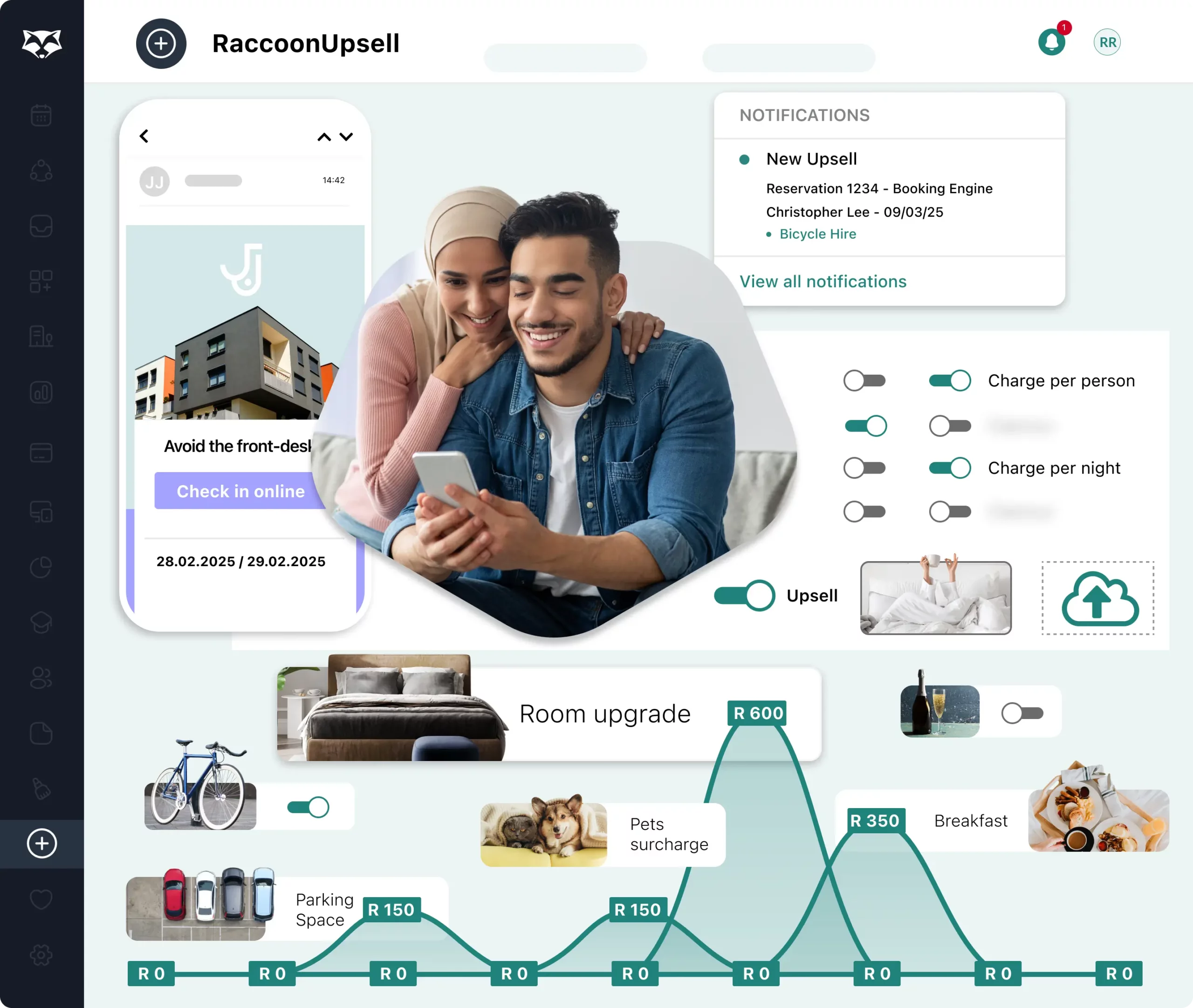
Automated upselling in hospitality is hotel software that automatically offers guests paid upgrades or additional services during the digital guest journey. Instead of relying on staff to manually suggest extras, the system analyses reservation details and presents relevant options such as room upgrades, breakfast, parking, early check-in, or late check-out. These offers typically appear after booking confirmation, during online check-in, or shortly before arrival, allowing accommodation providers to increase average booking value while keeping the process convenient and guest-friendly.
2How does automated upselling work with a Property Management System (PMS)?
A Property Management System acts as the operational core of hotel software, storing reservation data, guest profiles, room availability, and stay details. Automated upselling connects directly to the PMS so that offers are generated using real-time booking information. When a reservation enters the system, the software can automatically determine which upgrades or add-ons are available and appropriate. This integration ensures offers remain accurate, prevents overselling, and allows staff to manage upsell inventory, pricing rules, and availability from one central platform.
3Why is automated upselling important for hotels and guesthouses in South Africa?
Automated upselling helps South African accommodation providers increase revenue without relying solely on higher room rates. The country’s hospitality sector includes many independent guesthouses, lodges, and boutique hotels that operate with limited staff. Automated offers allow these businesses to grow revenue per guest while maintaining efficiency. Because bookings often arrive through both direct channels and international OTA platforms, upselling also helps properties capture additional value after the initial reservation has already been confirmed.
4What is the difference between upselling and cross-selling in hospitality?
Upselling and cross-selling are related but distinct revenue strategies within hotel operations. Upselling focuses on encouraging guests to purchase a higher-value version of the original product, such as upgrading from a standard room to a premium suite or selecting a flexible rate with added benefits. Cross-selling, by contrast, promotes complementary services like airport transfers, spa access, dining packages, or tours. In modern hotel software, both approaches are often delivered through automated guest journeys, but they target different types of guest spending.
5Which hotel services are best suited to automated upselling?
Automated upselling works best for services that are easy for guests to understand and operationally simple to deliver. Typical examples include room upgrades, breakfast packages, parking, airport transfers, early check-in, late check-out, spa treatments, and special occasion packages. Because these services can be predefined in hotel software, they can be presented consistently across booking confirmations, pre-arrival emails, or online check-in pages. This structured approach ensures guests see relevant offers without creating additional manual work for hotel staff.
6When should hotels present upsell offers during the guest journey?
Timing is a critical factor in upsell conversion. The most effective moment is usually after the booking confirmation, when the guest is already committed to the stay but still planning details of the trip. Additional opportunities occur during pre-arrival communication, online check-in, or shortly before arrival. At these stages guests are more receptive to convenience-based upgrades. Hotel software can automate these timing rules, ensuring offers appear at the right moment without requiring staff to manually manage guest communication.
7How does automated upselling support hotel revenue management?
Automated upselling supports revenue management by increasing the value of each confirmed reservation without altering public room rates across distribution channels. By offering upgrades or add-ons based on availability and booking context, hotels can monetise unused inventory such as premium rooms or late checkout slots. When integrated with a Property Management System and channel distribution tools, upselling becomes part of a broader revenue strategy that focuses on total guest spend rather than only the nightly room rate.
8Can automated upselling reduce dependence on OTA bookings?
Automated upselling does not replace OTA distribution, but it helps accommodation providers improve profitability from bookings that originate on those platforms. OTA reservations often generate lower margins due to commission costs, yet automated upselling allows hotels to present additional services directly to the guest after the reservation is confirmed. By increasing total booking value through upgrades and add-ons, properties can partially offset distribution costs while maintaining visibility across global booking platforms.
9How does automated upselling integrate with a Channel Manager?
A Channel Manager synchronises room availability and rates across multiple distribution channels such as OTAs, direct websites, and global booking platforms. Automated upselling complements this system by working after the reservation has entered the Property Management System. Once the booking is confirmed and availability is updated through the Channel Manager, the upselling module can safely offer upgrades or add-ons without risking inventory conflicts. This integration ensures that distribution and guest revenue opportunities remain aligned.
10How does automated upselling connect with a hotel Booking Engine?
A hotel Booking Engine handles direct reservations made through the accommodation provider’s website. Automated upselling extends this process by presenting additional paid options after the guest completes the booking or during the pre-arrival phase. Because the Booking Engine already collects guest details and stay dates, hotel software can use this information to generate personalised offers. The result is a seamless digital booking journey where guests can easily add upgrades or services before they arrive.
11What operational benefits does automated upselling provide beyond revenue?
Definition first: automated upselling is also an operational efficiency tool. By presenting structured offers automatically, it reduces the need for front-desk staff to manually suggest upgrades during check-in. This standardisation improves consistency across guest interactions and prevents missed revenue opportunities. It can also improve operational planning because accepted extras appear in the system ahead of arrival, allowing housekeeping, food service, or transport teams to prepare in advance based on confirmed guest selections.
12Is automated upselling suitable for small independent hotels and lodges?
Automated upselling is particularly useful for smaller accommodation providers that operate with limited staff and resources. Independent guesthouses, lodges, and boutique hotels often rely on a small team to manage reservations, guest communication, and operations. Automation allows these businesses to present consistent upgrade offers without increasing workload. Because the system works continuously across digital communication channels, smaller properties can generate additional revenue while maintaining a personalised guest experience.
13Which software integrations are essential for automated upselling?
The most important integrations include the Property Management System, Channel Manager, Booking Engine, guest messaging tools, and digital payment gateways. These connections allow automated upselling to access real-time reservation data, confirm available inventory, process payments, and update guest records. Without these integrations, staff would need to manually track upgrades and extras, increasing the risk of operational errors. A connected hotel software environment ensures that upselling operates smoothly across reservations, guest communication, and financial reporting.
14How should hotels price upgrades and add-on services?
Pricing upgrades and add-ons requires balancing guest value, remaining inventory, operational cost, and demand levels. A common approach is to offer upgrades at a lower price than the difference between public room rates, making the offer attractive while still generating additional revenue. For services such as breakfast or parking, pricing should reflect perceived convenience and local market expectations. Hotel software allows operators to define rules and adjust prices seasonally while maintaining consistent presentation to guests.
15What costs are typically involved in automated upselling software?
Costs vary depending on property size, software functionality, and the level of integration required. Most modern hotel platforms operate on subscription-based pricing that includes modules such as the Property Management System, Channel Manager, Booking Engine, and guest communication tools. Additional features such as automated upselling or payment integrations may be included within broader packages. For accommodation providers, the main evaluation factor is the return on investment generated through higher guest spending and operational efficiency.
16How long does it take to implement automated upselling in a hotel system?
Implementation timelines depend on the complexity of the property’s existing technology setup. Hotels already using integrated cloud hotel software can often activate automated upselling relatively quickly because reservation data and inventory management are already centralised. Properties transitioning from multiple disconnected systems may require additional configuration. Typical setup steps include defining upgrade options, setting pricing rules, linking payment methods, and testing the guest communication flow before launching the automated offers.
17What guest data is used for automated upselling?
Automated upselling relies primarily on reservation data such as arrival and departure dates, room category, booking channel, and guest preferences. Some systems also consider historical stay information or behavioural patterns to tailor offers more effectively. The goal is to ensure that the proposed upgrades or services are relevant to the guest’s travel context. By using structured reservation data rather than intrusive profiling, hotels can present helpful suggestions that enhance the guest experience while maintaining operational simplicity.
18How does South Africa’s POPIA privacy law affect automated upselling?
The Protection of Personal Information Act (POPIA) regulates how organisations in South Africa collect, process, and store personal data. Hotels using automated upselling must ensure that guest information is handled responsibly and only used for legitimate operational purposes. Reservation details, contact information, and communication preferences should be stored securely and processed in compliance with privacy principles. Clear data handling procedures help accommodation providers maintain trust while still benefiting from digital guest communication and automation.
19How do local payment methods influence upselling success in South Africa?
Payment convenience strongly influences whether guests accept upsell offers. South African travellers commonly use credit cards, debit cards, and instant electronic payment options when completing digital transactions. If hotel software supports familiar payment methods, guests can confirm upgrades or add-ons quickly without leaving the booking journey. This frictionless payment experience increases conversion rates and allows accommodation providers to capture additional revenue before arrival rather than relying solely on on-site purchases.
20How does VAT apply to hotel upgrades and add-on services in South Africa?
Value Added Tax generally applies to accommodation services and related hospitality offerings within South Africa. When hotels sell room upgrades, meals, or additional services through automated upselling, these transactions usually form part of the taxable supply of hospitality services. For this reason, hotel software should record upsell purchases accurately within the reservation and invoicing system. Proper configuration ensures that financial reporting, invoicing, and tax compliance remain consistent across all guest transactions.
21Can automated upselling benefit seasonal tourism properties?
Seasonal tourism properties often experience fluctuating demand depending on travel patterns, weather, and holiday periods. Automated upselling helps these businesses increase revenue during peak seasons by monetising premium inventory and during quieter periods by promoting value-added services. Because the offers can be adjusted dynamically, accommodation providers can highlight experiences, late checkout, or bundled packages that match the expectations of leisure travellers while maintaining operational control over availability.
22How can hotels measure the performance of automated upselling?
The effectiveness of automated upselling can be measured through several operational and financial indicators. Important metrics include upsell conversion rate, additional revenue per reservation, acceptance rates for specific services, and the percentage of guests interacting with offers during the pre-arrival phase. Analysing these metrics helps hotels understand which upgrades or extras resonate with guests. Over time, this data supports more precise revenue strategies and improves the relevance of automated guest communication.
23What common mistakes should hotels avoid when launching automated upselling?
One common mistake is presenting too many offers at once, which can overwhelm guests and reduce conversion rates. Another issue is offering upgrades that are not operationally available, leading to service problems upon arrival. Hotels should also avoid generic offers that ignore guest context, such as stay length or arrival time. A well-configured system uses accurate inventory data, clear pricing rules, and targeted communication to ensure that automated upselling remains relevant and manageable.
24Does automated upselling replace the role of front-desk staff?
Automated upselling does not replace front-desk staff but rather complements their work. Automation handles routine revenue opportunities before arrival, allowing staff to focus on personalised service during the guest’s stay. When guests arrive, staff members can still recommend additional services or respond to specific requests. This balance allows hotels to capture structured digital revenue opportunities while maintaining the human interaction that remains central to hospitality experiences.
25How does RoomRaccoon support automated upselling for hotels?
RoomRaccoon provides automated upselling as part of an integrated hotel management platform that connects a Property Management System, Channel Manager, Booking Engine, and guest communication tools. Because these components operate within one cloud-based environment, reservation data can trigger personalised upgrade offers during the pre-arrival journey or online check-in process. This integration allows accommodation providers to manage upgrades, add-ons, payments, and guest communication from a single system while maintaining operational visibility and revenue control.