



















Lodge Management System: 5 Benefits for South African Lodges
Share this post

A lodge management system brings reservations, guest details, payments and daily operations into one place. Its five main benefits are clearer booking records, simpler billing, better housekeeping coordination, more opportunities to sell extras and flexible access to your business. The right setup connects these tasks so your team spends less time updating separate systems.
Running a lodge means coordinating more than overnight stays. A family may need two chalets, dinner on arrival and an early game drive, while another guest still needs to pay a deposit. For South African lodge owners and managers, connected software can make these details easier to manage without losing the personal service guests come for.
What is a lodge management system?
A lodge management system is software for managing accommodation bookings and the work surrounding each stay. It usually centres on a property management system (PMS), where staff manage reservations, room allocations, guest information, check-in, check-out and invoices.
A connected setup also includes a booking engine for your own website, a channel manager for online travel agencies (OTAs) and a payment solution. These functions may come in one platform or work through integrations. Housekeeping, upselling and specialist tools can depend on the package or additional modules.
The important question is whether the software handles your lodge’s actual booking rules: individual rooms or entire units, different occupancy levels, meal packages and optional activities. A system that sells an extra does not necessarily schedule the vehicle, guide or treatment slot needed to deliver it.

Five benefits of using a lodge management system
1. Keep reservations and availability in one place
A shared reservation calendar gives your team a consistent view of who is arriving, which units are occupied and what each booking includes. It reduces the need to piece together information from emails, spreadsheets and separate booking websites.
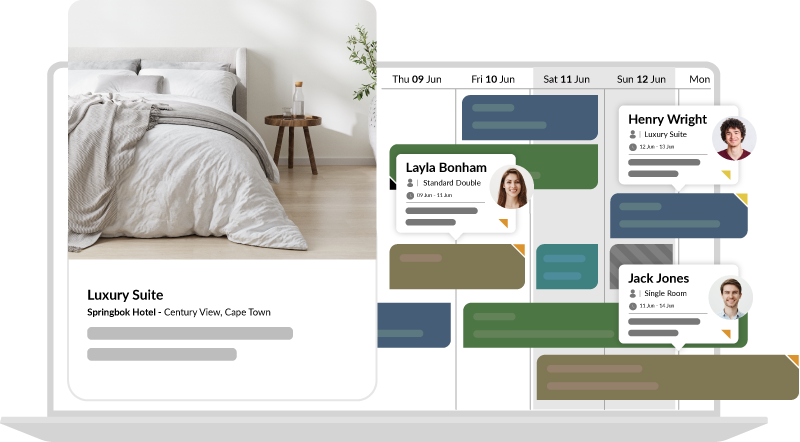
RoomRaccoon’s PMS provides a colour-coded reservation calendar and access to booking details, special requests and payment statuses. Its channel manager exchanges rates, availability and reservations with connected sales channels, while the booking engine lets guests book through your lodge’s website.
For example, when your last available chalet is booked online, the connected systems update the remaining inventory. A telephone or WhatsApp booking still needs to be entered correctly. Good room mapping and monitoring of failed updates remain essential: synchronisation reduces overbooking risk but cannot remove every possible error.
2. Make deposits, payments and billing easier to track
When payment records sit alongside the reservation, staff can check what a guest has paid and what remains outstanding. This is useful for lodges taking advance deposits, collecting balances before arrival or adding purchases during a stay.
RoomRaccoon’s integrated payment solution in South Africa is powered by Peach Payments and supports payment links for deposits and outstanding balances. Connected payment records help reduce manual reconciliation.
Consider a booking with accommodation, a road transfer and an optional dinner. Your team should be able to explain the charges, see the deposit and check the balance before departure. If restaurant or bar purchases need to flow onto the guest’s invoice, confirm the required point-of-sale integration.
Set clear payment deadlines and cancellation conditions. Check how unsuccessful payments and refunds are handled, and distinguish automatically processed payments from EFTs or cash payments that your team may need to record.
3. Coordinate housekeeping across rooms, chalets and suites
On a spread-out property, reception needs to know whether a unit is ready without repeatedly calling housekeeping. A shared task list helps staff prioritise departures, stayovers and incoming guests, while maintenance reporting gives problems a clear owner.
The RaccoonHousekeeping upgrade supports task assignments, mobile status updates and maintenance reports. Staff can view relevant jobs and record issues from their devices.
For example, a cleaner can report a faulty shower before the next guest arrives. The team can then arrange a repair and decide whether the unit needs to remain unavailable. Agree who checks completed work and updates room readiness; software supports that process, but your team still owns the handover.
4. Offer relevant extras and manage rates more deliberately
Guests cannot book an experience they do not know about. Showing suitable extras before arrival gives them time to plan and helps your lodge prepare. Depending on your offering, these might include a picnic basket, firewood for a braai, a spa treatment or a transfer.
RoomRaccoon’s booking engine supports add-ons during direct booking. The RaccoonUpsell upgrade also presents extras and room upgrades during online check-in. Make descriptions specific about what is included, the price and any booking conditions.
For capacity-limited activities such as game drives, confirm how seats, departure times and staff availability are managed before offering instant confirmation. Selling an add-on and reserving activity capacity are separate requirements.
Pricing deserves the same attention. Use occupancy and booking patterns to review rates for school holidays, long weekends and quieter periods. RoomRaccoon’s revenue management tools include dynamic pricing rules, with competitor insights available through RaccoonRev. Compare similar accommodation and inclusions rather than copying another lodge’s headline price.
5. Manage remotely and connect tools as your lodge grows
Cloud-based lodge management software lets authorised staff access the system over the internet, including when the owner or reservations team is away from the property. Relevant integrations can connect functions such as accounting, point of sale or compatible digital locks.
Connected guest communication is equally useful. Send practical arrival information, such as directions, gate arrangements and check-in instructions, before guests travel. Our guide to hotel check-in software explains how online registration can support the arrival process.
Cloud access requires a working connection. Check mobile coverage where staff will use the system, consider backup connectivity and keep an appropriate arrivals contingency procedure. Ask the supplier exactly which functions remain available during an outage and how changes are reconciled afterwards.
For a local example, read how Zwahili Private Game Lodge & Spa uses RoomRaccoon. The Limpopo lodge’s case study describes remote reservation management, automated pre-arrival communication and offering extras through its booking engine.
What should you check before choosing lodge management software?
Bring examples of your own bookings to a demonstration. A straightforward room reservation will not show whether a system can handle your family rates, agent bookings or accommodation packages.
| Your lodge’s requirement | What to ask the provider to demonstrate |
|---|---|
| Rooms, chalets and packages | Book your actual unit types and occupancy combinations. Check per-person or per-unit pricing, child rates and included meals where relevant. |
| Travel agents and groups | Apply an agreed rate, allocate several rooms and show who receives the invoice and pays the balance. |
| Payments | Take a deposit, record a payment made outside the system and process a cancellation. Confirm South African payment options and fees. |
| Activities and extras | Show how an extra reaches the guest bill and the team delivering it. Check whether capacity and time slots need another tool. |
| Housekeeping and connectivity | Update a room’s status on the devices your staff use. Explain the procedure when the lodge loses connectivity. |
| Support and total cost | Confirm included modules, integrations, onboarding, training, support hours, contract terms and access to your data when leaving. |
On smaller screens, scroll the table horizontally to view both columns.
Frequently asked questions
Is a lodge management system worthwhile for a small lodge?
It can be, particularly when a small team handles several booking channels, deposits and guest requests. Compare the total cost with the tasks you need to simplify. Start with reliable reservations, distribution, direct booking and payments, then assess additional modules against your actual workload.
How much does lodge management software cost?
Costs depend on the provider, property size, package and additional services. Compare the subscription, setup and training costs, payment processing fees and any paid integrations. Review RoomRaccoon’s current packages and pricing and request a quote for your lodge. A commission-free booking engine does not remove subscription or payment processing costs.
What should we prepare before switching systems?
Prepare your unit types, rate plans, future reservations, deposits, booking conditions and channel connections. Agree which records will be migrated, how balances will be checked and who will train the team. Before going live, test a direct booking, an OTA booking, a modification, a payment and a cancellation.
See how RoomRaccoon could work for your lodge
Bring your room types, packages and a typical guest booking to a personalised demo. Explore the reservation, payment and housekeeping workflow, and confirm which modules and integrations your lodge needs.
Follow us


Nicky. M
Nicky is RoomRaccoon's Senior Content Manager, combining a love for travel with a practical approach to improving hotel performance through tech and insightful tips. Join her journey where travel, hospitality, and technology meet.


Subscribe to our newsletter for more on the latest hospitality & RoomRaccoon updates delivered straight to your inbox!

